The DEI Rollback Is Real — Here’s How Florida’s Black Businesses Are Fighting Back
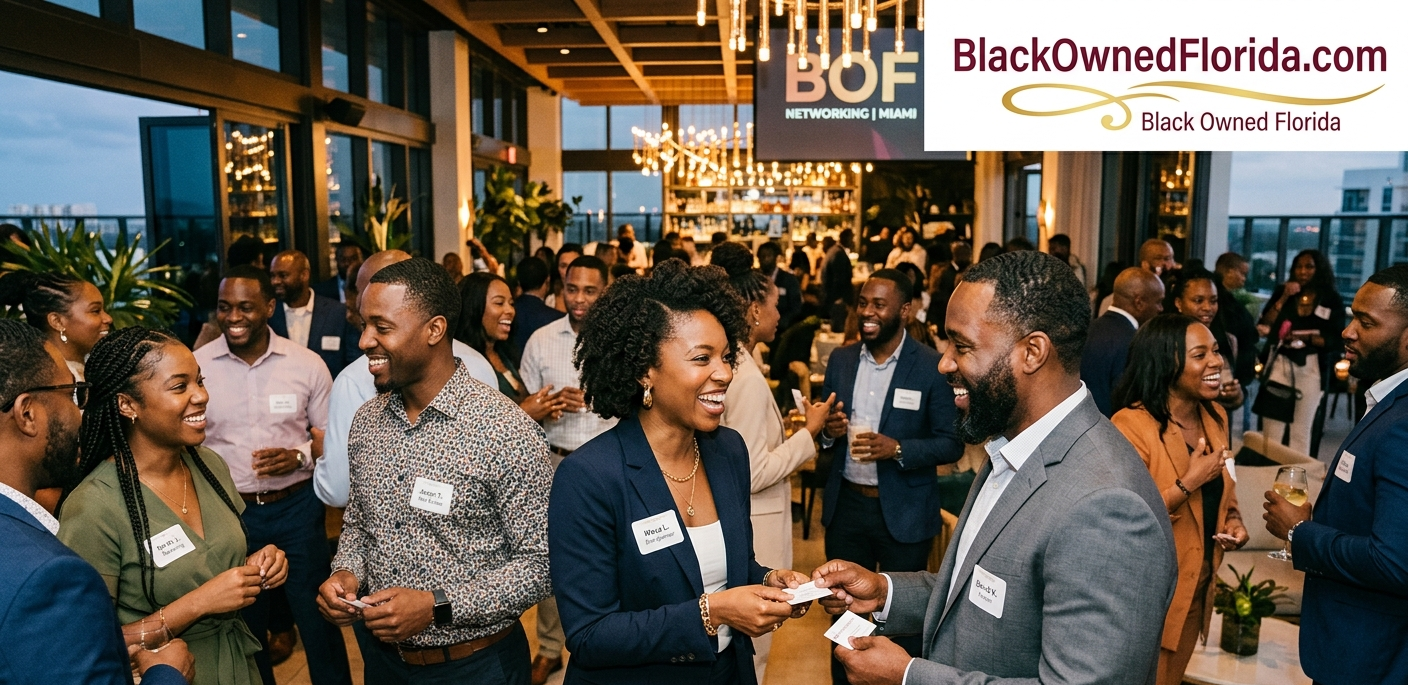
Florida’s Black business community is built on relationships — and that’s exactly what no executive order can undo.
In the span of 27 days this April, two things happened that every Black business owner in Florida needs to know about.
On March 26, President Trump signed an executive order — formally titled “Addressing DEI Discrimination by Federal Contractors” — that directed federal agencies to penalize contractors who consider diversity or equity factors when awarding subcontracts. Noncompliance could mean canceled contracts, suspension from future government work, and Department of Justice investigations.
Then on April 22, Governor DeSantis signed Florida’s SB 1134 into law, which bans local governments across the state from funding, promoting, or implementing DEI initiatives. Local officials who violate the law can be removed from office. It goes into effect January 2027.
That’s a one-two punch — federal and state — landing in the same month.
We’re not here to panic about it. We’re not here to pretend it isn’t happening either. What we are here to do is give you the full picture, tell you what it actually means for your business, and — most importantly — show you what people are already doing about it.
📋 What just happened — at a glance
- March 26, 2026: Trump executive order bars federal contractors from DEI considerations in subcontracting; noncompliance triggers contract cancellation, suspension, and DOJ investigation
- April 21, 2026: National Association of Minority Contractors (NAMC) and allies file federal lawsuit in Maryland challenging the order on First Amendment grounds
- April 22, 2026: DeSantis signs SB 1134 — Florida local governments now banned from DEI spending; effective January 2027
- April 23, 2026: Onyx Impact publishes The Blackout Report, documenting early economic harm to Black-owned businesses nationally
- Also in play: Florida legislature proposes renaming the Office of Supplier Diversity to “Office of Supplier Development” — shifting focus away from minority-owned business support
What This Actually Means for Black Businesses in Florida
Let’s start with the federal order, because that’s where the immediate financial exposure is largest.
Federal contracting is a $774 billion market. And before this order, Black-owned businesses were already working with a severe disadvantage — receiving just 1.2% of those federal dollars. That number isn’t low because Black businesses aren’t qualified. It’s low because the doors that were supposed to be propped open — through supplier diversity programs and Disadvantaged Business Enterprise (DBE) certifications — were never fully open to begin with.
Now those programs are being pulled. The Onyx Impact Blackout Report, published April 23, documents what’s already happening in real time: Black-owned businesses are being dropped from supply chains. Smaller firms are being buried under compliance burdens they didn’t write. Outreach and supplier development efforts have slowed. And the repeat contract relationships that help businesses grow over time — those are drying up too.
Black women are getting hit especially hard. They own 48% of all Black-owned businesses. The BOW Collective surveyed their Black women CEO network and found that over half reported revenue losses exceeding $100,000 — directly tied to these policy shifts.
“These policies are not always successful, but we know one thing for sure — we will not have success if we do not even try.”
— Wendell R. Stemley, National President, NAMCHere in Florida, the state-level picture adds another layer. SB 1134 doesn’t just affect business contracting — it cuts off city and county government funding for diversity programs, which often served as entry points for minority-owned businesses into local procurement. And the quiet proposal to rename the Office of Supplier Diversity to “Office of Supplier Development” — stripping its minority business mandate — is exactly the kind of structural change that doesn’t make headlines but absolutely affects your bottom line.
Not sure how these changes affect your specific business? Our Florida Black Business Hub has every alternative funding source and program still available to you.
See the Hub →Here’s the Part the Headlines Are Missing
The story isn’t just what’s being taken away. It’s what’s being built in response — and how fast.
On April 21, just one day before DeSantis signed SB 1134, the National Association of Minority Contractors filed a federal lawsuit in Maryland challenging the Trump executive order. The central argument: the order violates First Amendment protections by forcing businesses to choose between discussing race and keeping federal contracts. Democracy Forward and the Minority Business Enterprise Legal Defense and Education Fund are handling litigation.
NAACP Legal Defense Fund attorney Donya Khadem has made clear: the executive order does not change federal civil rights law. Race-based discrimination in contracting remains illegal. Contractors can still choose Black-owned businesses for legitimate business reasons — skill, cost, performance. In limited cases, race-conscious remedies for past discrimination also remain lawful.
That’s not a small distinction. That’s a door that’s still open.
Meanwhile, five prominent Black executives convened with Bloomberg Businessweek in April to go on record about what they’re doing — not lamenting, but building. Supporting the next generation. Redirecting resources. Strengthening community ecosystems that were never solely dependent on government programs.
That’s exactly where BlackOwnedFlorida.com has always lived. We’ve been connecting Florida’s Black business community since 2020 — before the political weather changed and after it did. Our directory, our resources, our network exist independent of what any executive order says.
What Florida’s Black Business Owners Can Do Right Now
We’re not going to give you a list of things to worry about. You’re already doing that. Here’s a list of things to do.
Your 5-Step Response Plan
- 1Audit your current contract and revenue mix If any meaningful portion of your revenue runs through federal contracting, local government supplier diversity programs, or corporate DEI budgets — map it now. Know your exposure before you need to respond to it.
- 2Diversify your funding sources — beyond government The Florida Black Business Loan Program, NAACP Powershift Grant, Operation HOPE 1MBB, and SSBCI capital are all still active and do not rely on federal DEI mandates. Find what you qualify for at our Florida Black Business Hub.
- 3Get certified — ByBlack, FSMSDC, NMSDC ByBlack certification increases your visibility with consumers and corporate buyers who proactively seek out Black-owned businesses independent of government mandates. FSMSDC’s MBE certification connects you to private-sector supplier networks. These remain powerful even as government programs narrow.
- 4List your business on BlackOwnedFlorida.com — free The single fastest way to get in front of Florida consumers who are actively choosing to spend with Black-owned businesses. No government program required. No DEI mandate. Just community.
- 5Connect with Florida’s Black business organizations The African American Chamber of Central Florida, Miami-Dade Chamber, Florida SBDC Network, and PoweringFlorida’s BE PowerFL program are all actively helping Black entrepreneurs navigate this moment. You don’t have to figure this out alone.
The Bigger Picture — and Why This Community Was Never Built on Permission
Here’s what we keep coming back to: the Black business community in Florida was not built on DEI programs. It was built by people who showed up, built relationships, delivered results, and kept going even when the systems around them were actively hostile.
Eatonville, Florida — the first incorporated all-Black municipality in the United States — was built in 1887. Not because someone signed an executive order permitting it. Because people decided to build it.
Overtown in Miami was once called “The Harlem of the South” — a booming Black economic district that produced the state’s first Black millionaire, Dana Albert Dorsey — before policies and highways dismantled it. The community that built Overtown didn’t wait for permission. Neither did the people who rebuilt after.
We’ve been here before. The conditions change. The community doesn’t stop.
What DEI rollbacks do — at their worst — is remove a margin of access that was already thin. But they don’t remove skill. They don’t remove expertise. They don’t remove the $2.1 trillion in Black buying power that is actively choosing where to spend. And they don’t remove the 21,000+ Black-owned businesses in Florida that are open for business right now.
The strongest protection against what’s being removed isn’t political — it’s economic. Build the revenue base, the network, and the certifications that don’t require government permission to exist.
— BlackOwnedFlorida.comThat’s what this hub is for. That’s what this community is for. And that’s what we’ll keep showing up for — every week, through this series and beyond.
Ready to find what’s available to your business right now — grants, loans, and programs that don’t require a DEI program to exist?
Go to the Hub →Your Business Deserves to Be Found
List your Black-owned Florida business in our free statewide directory — and get access to every grant, loan, and resource still available to you. No DEI mandate required.