Why a Dollar Only Stays 6 Hours in the Black Community — And What We Can Do About It
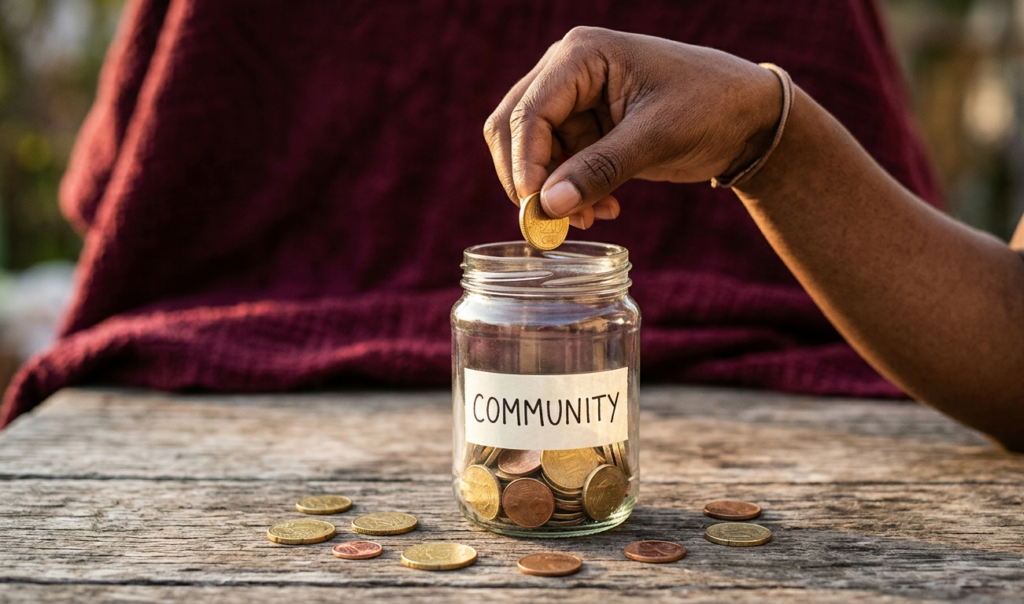
Six hours. That’s how long a dollar circulates in the Black community before leaving it — compared to up to 28 days in other communities. Understanding why that gap exists is the first step to closing it. Here’s the full picture, the economics behind it, and the practical moves that actually change the number.
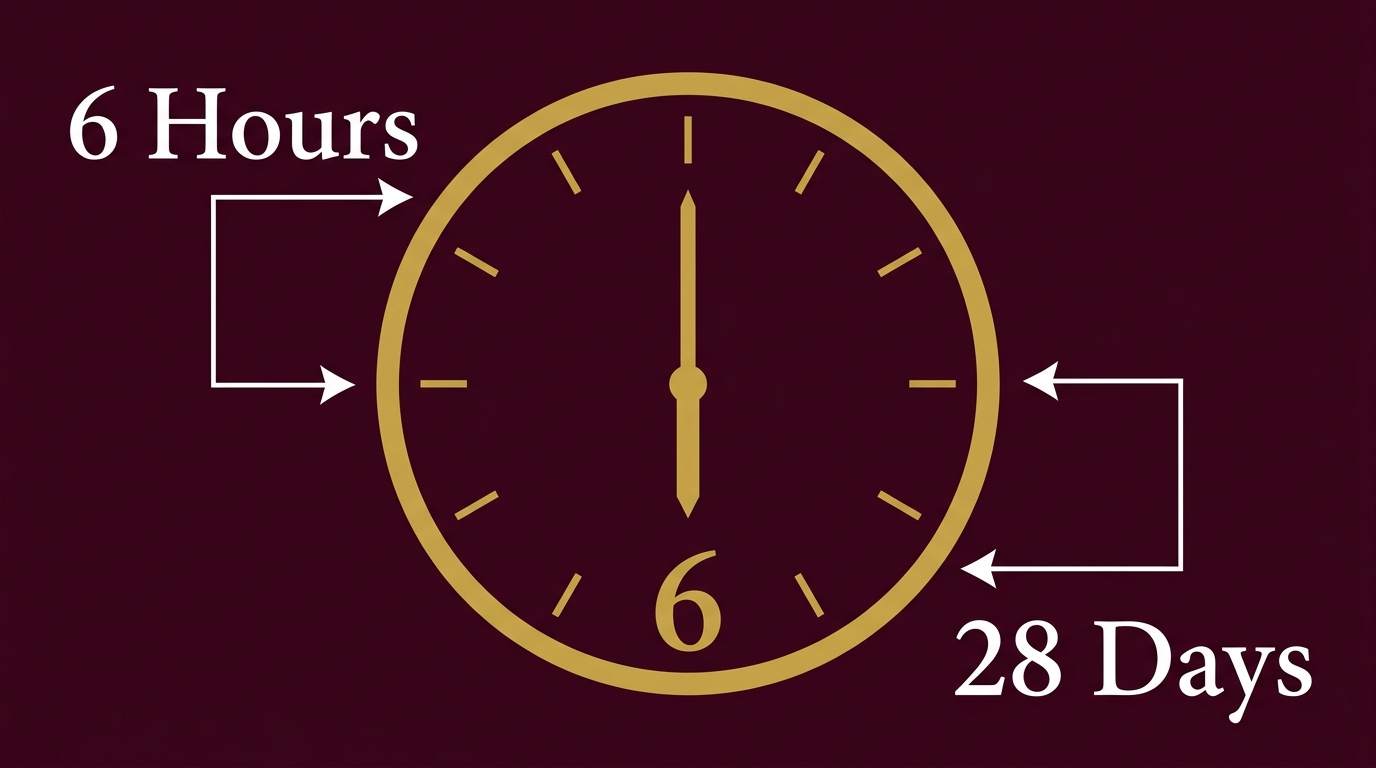
Let’s start with what this number is not. It is not a criticism of Black spending habits. It is not an argument that Black people are doing something wrong with their money. And it is absolutely not a suggestion that Black people need to be more financially responsible.
The 6-hour figure is an economic infrastructure problem — and infrastructure is built, not inherited. Other communities didn’t stumble into longer dollar circulation by accident. They built the banks, the grocery stores, the professional networks, and the deliberate spending habits that keep money moving within their communities. And they did it, in many cases, in direct response to being excluded from mainstream American economic life.
Sound familiar? It should. Because Black Americans have faced that exact exclusion — and in states like Florida, where over 3.8 million Black residents represent one of the largest Black populations in the country, the stakes of closing this gap couldn’t be higher.
What “Dollar Circulation” Actually Means — And Why the Gap Is So Wide
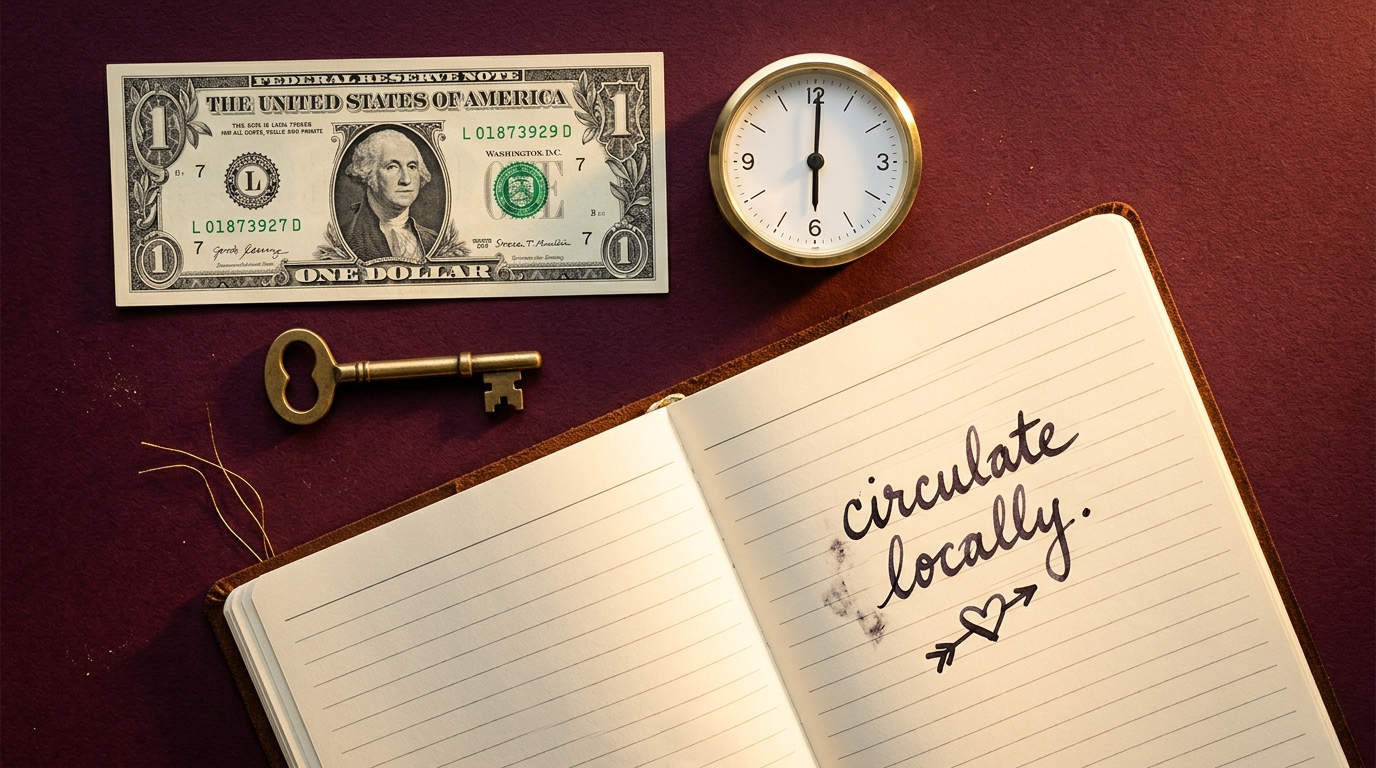
Dollar circulation — sometimes called the economic multiplier effect — measures how many times a single dollar changes hands within a community before flowing out to businesses, vendors, or institutions outside that community. Every time a dollar is spent at a business that employs local workers, pays local vendors, uses local services, and invests locally, that dollar creates economic activity at each stop before eventually leaving.
When you spend $100 at a locally-owned Black business, and that business owner uses part of that revenue to pay a Black employee, who then spends some of their paycheck at a Black-owned restaurant, which then orders from a Black-owned food supplier — that same $100 has created far more than $100 in economic activity before any of it leaves the community.
That’s the multiplier. And the Black community’s multiplier is almost nonexistent by comparison to others — not because Black people don’t spend, but because the businesses and infrastructure to capture and recirculate that spending haven’t been built at scale.
Sources: Nielsen Buying Power Report; Joint Center for Political and Economic Studies; U.S. Census Bureau
With $1.8 trillion in annual buying power, the Black community isn’t poor. It is leaking. And the leak isn’t a personal failure — it’s the predictable result of decades of systemic exclusion from business ownership, lending access, property rights, and professional networks that other communities used to build internal economic infrastructure.
The Black community doesn’t have a spending problem. It has a recirculation problem. And recirculation is an infrastructure question — which means it’s a solvable one.
How Other Communities Built Their Economic Infrastructure — And What We Can Learn
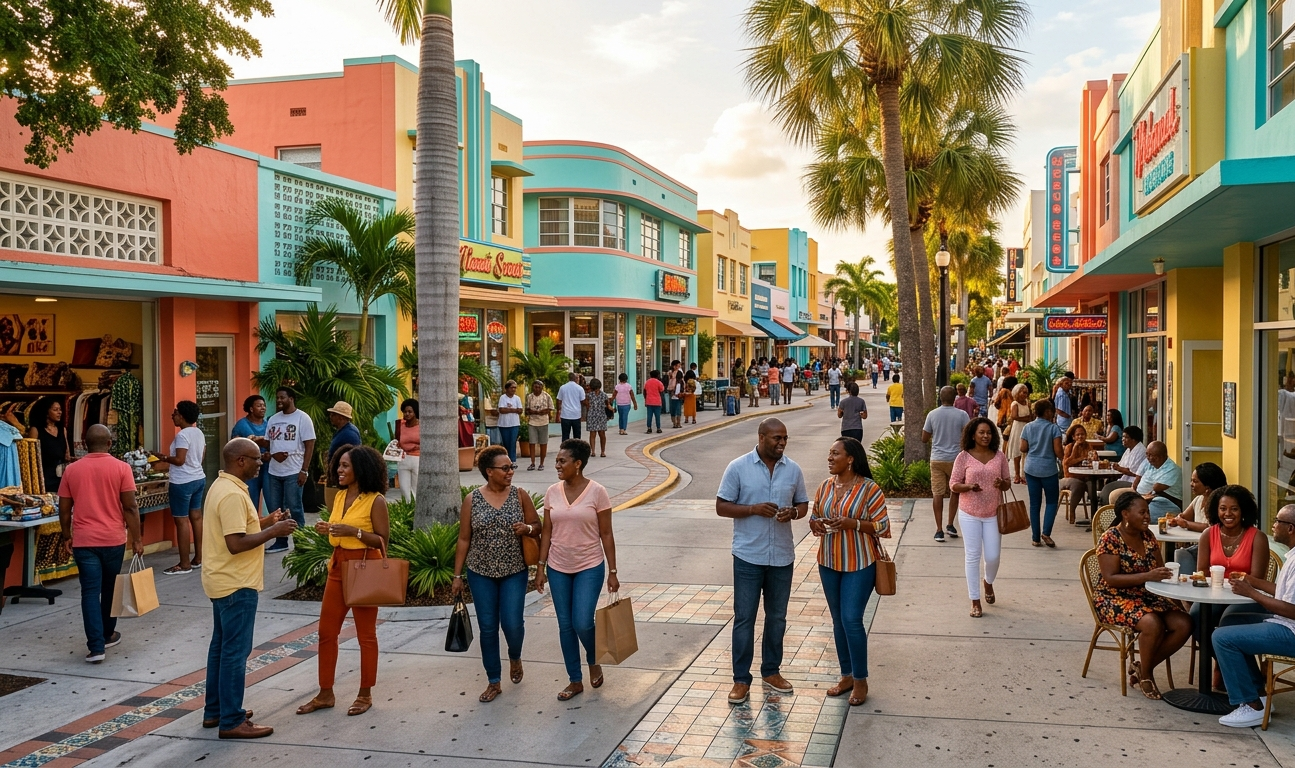
The communities with the longest dollar circulation didn’t get there by accident, and they didn’t get there because of some innate cultural difference. They got there through deliberate, generational, community-coordinated economic behavior — often in direct response to being excluded from mainstream economic participation.
What the data shows about high-circulation communities
High-circulation communities built their multiplier through a combination of business formation (creating places for money to land), professional networks (directing contracts and referrals within the community), banking infrastructure (keeping deposits and lending internal), and cultural norms around supporting community businesses as a first resort rather than an afterthought.
Black Wall Street in Tulsa — before its deliberate destruction in 1921 — had a dollar circulating up to 36 to 100 times before leaving. That wasn’t magic. It was an economic ecosystem built from grocery stores, hotels, law offices, medical practices, and hair salons all choosing each other first. The infrastructure to do the same thing exists in Florida right now. What it needs is the coordinated will to use it.
The Five Moves That Actually Change the Number in Florida
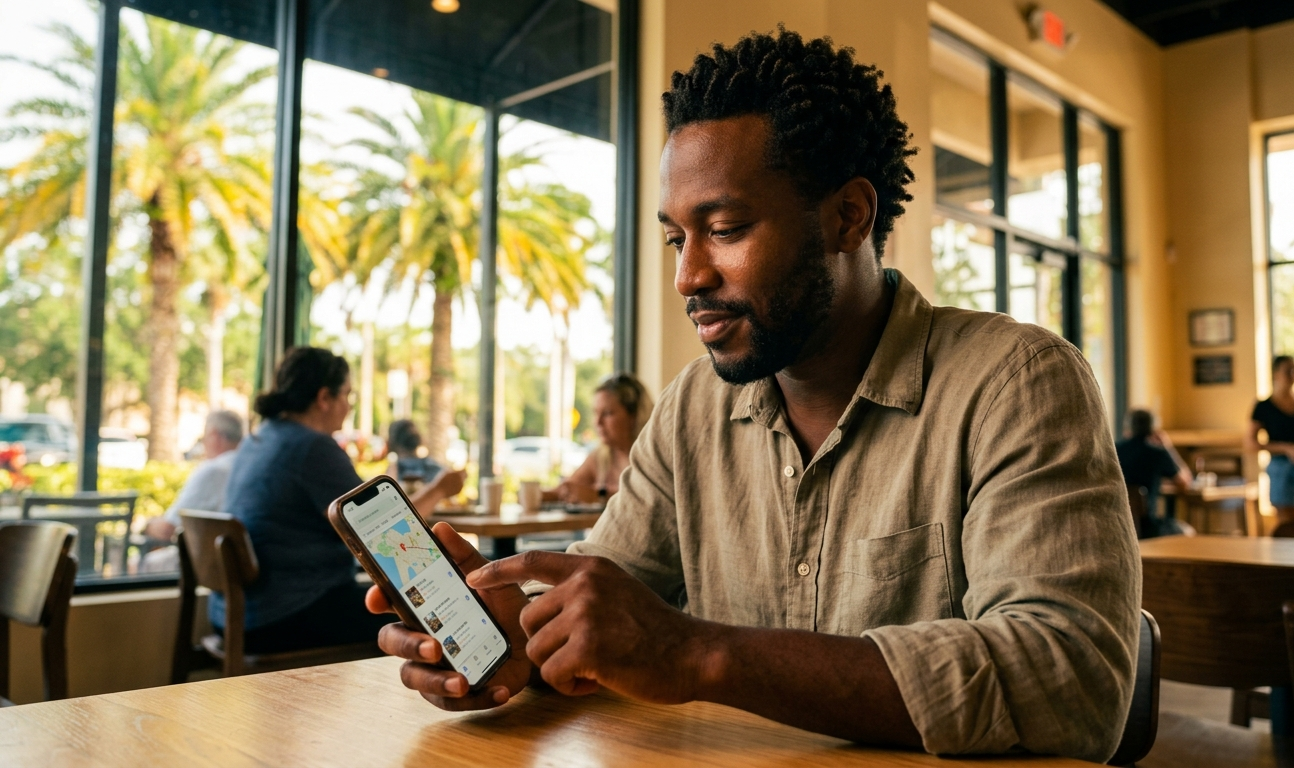
Awareness is the beginning, not the answer. Here are the five concrete moves — some individual, some collective — that have a measurable impact on dollar circulation in Florida’s Black community.
-
Search before you spend — every time. Before booking, ordering, or hiring, spend 90 seconds searching BlackOwnedFlorida.com first. This single habit, repeated across 3.8 million Black Floridians, is the fastest lever available. You don’t have to buy only from Black businesses — but if a Black-owned option exists and it’s comparable, that’s where your dollar belongs first.
-
Refer, review, and tag — out loud. Black-owned businesses are disproportionately shut out of the word-of-mouth and algorithm-driven recommendation systems that white-owned businesses benefit from by default. A five-star Google review, a tag on Instagram, or a recommendation in a neighborhood Facebook group is direct economic support that costs you nothing and compounds over time.
-
List your business — if you own one. Visibility is the first barrier. Every Black-owned business in Florida that isn’t listed in a searchable directory is invisible to the spending decisions happening around it. Listing on BlackOwnedFlorida.com is free and takes less than 10 minutes. If you own a Black business in Florida and you’re not listed, that changes today.
-
Move your professional spending first. Accountants, attorneys, real estate agents, mortgage brokers, insurance agents, financial advisors — these are high-dollar professional relationships where the spending impact is significant. Choosing a Black professional for your next professional service relationship keeps more money in the community at every transaction.
-
Talk about it — with specificity. “Support Black business” is a slogan. “I found my accountant, my doctor, my contractor, and my insurance agent through BlackOwnedFlorida.com and here’s how” is a conversation that changes behavior. The communities with the highest dollar circulation maintain it through cultural reinforcement — the norm is to check the community directory first. We can build that same norm in Florida.
What This Means for Florida Specifically — And Why This State Is Different
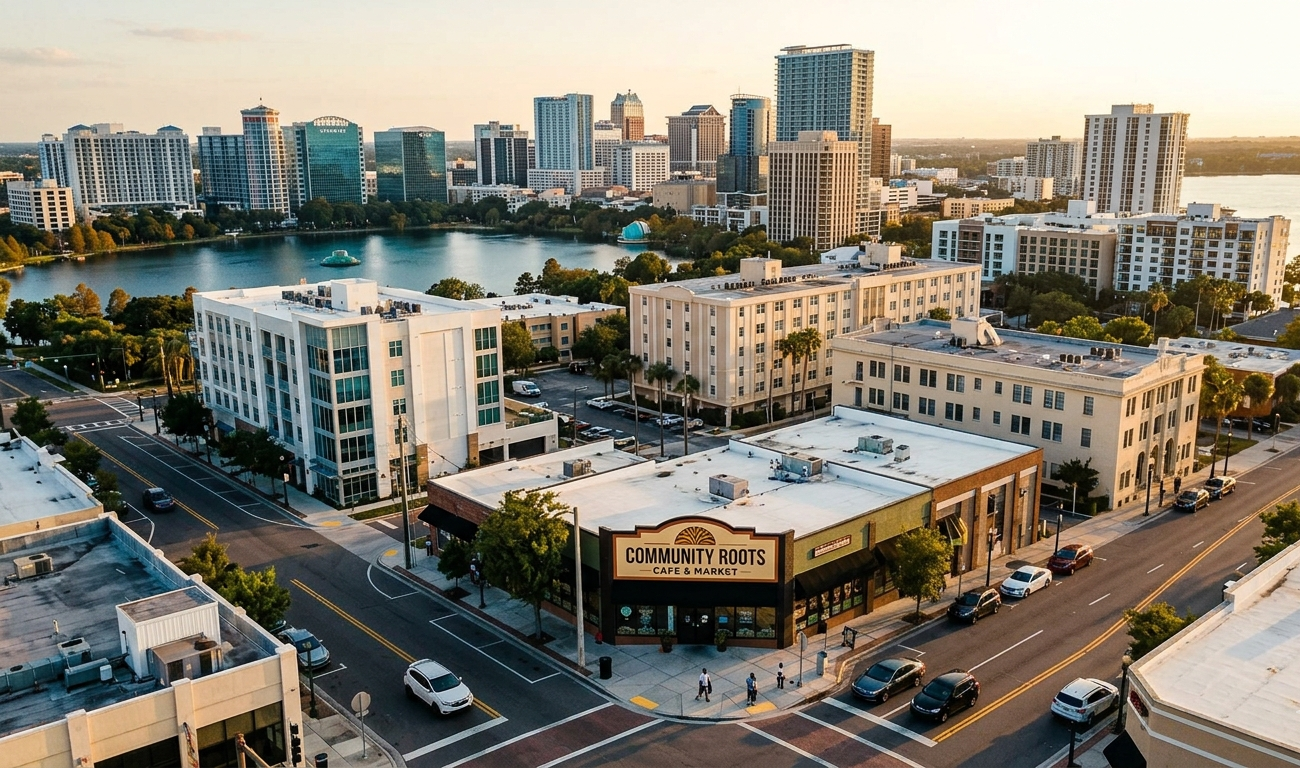
Florida’s Black community isn’t monolithic — and that’s a strength that often gets overlooked in national conversations about Black economic empowerment. Florida has significant Haitian, Jamaican, Bahamian, Trinidadian, and broader Caribbean-American populations, particularly in South Florida, Orlando, and Tampa. These communities bring diverse professional backgrounds, international business networks, and economic habits that, when connected to a Florida-wide directory and spending ecosystem, can dramatically accelerate circulation.
Florida is also one of the states most affected by the current wave of anti-DEI legislation — which, as we covered in our recent post on the MWSBE program shutdown, is removing government-backed pathways that minority business owners relied on for procurement access. That makes community-built infrastructure like BlackOwnedFlorida.com not just economically important but strategically essential. When government programs disappear, community networks have to be ready to carry the weight.
The opportunity here is real. Florida’s Black buying power, combined with tourism revenue flowing through Black-owned hospitality, beauty, and service businesses, creates a recirculation potential that no other state can match quite the same way. We don’t need a new program. We need a new habit — and a directory to make that habit easy.
Black Wall Street didn’t need a government grant to function. It needed people who decided their neighbor’s business was their first call. We can build that again — one search, one purchase, one referral at a time.
The Black Dollar Impact Calculator
What happens to community wealth when you shift even a small percentage of your monthly spending to Black-owned businesses? Enter your numbers and see the real difference — over 1 year, 5 years, and 10 years.
This calculator illustrates the potential economic multiplier effect of redirecting discretionary spending. Results are estimates based on documented dollar circulation research and are intended for educational purposes only. Actual community economic impact depends on many variables. Sources: Nielsen Buying Power Report; NAACP Economic Empowerment Research; Joint Center for Political and Economic Studies.
Frequently Asked Questions
Why does a dollar only stay 6 hours in the Black community?
The statistic that a dollar circulates for only about 6 hours in the Black community — compared to approximately 20 days in the Jewish community and 28 days in the Asian community — reflects a structural economic gap, not a personal or cultural failing. The primary reasons include: a lower concentration of Black-owned businesses relative to the size of the Black consumer market; limited access to business financing and capital historically provided through discriminatory lending practices; reduced professional network density that directs contracts and referrals within the community; and the legacy of policies like redlining, urban renewal displacement, and exclusion from the GI Bill that prevented wealth accumulation and business formation for generations. When Black consumers spend money, it tends to exit immediately to non-Black-owned businesses because community-internal infrastructure — the stores, suppliers, professionals, and service providers — is not yet present at sufficient scale to capture and recirculate it.
How does dollar circulation work and why does it matter?
Dollar circulation — also called the economic multiplier effect — measures how many times a single dollar changes hands within a defined community before flowing out to external businesses or institutions. Every time a dollar is spent at a business that employs local workers, uses local vendors, and reinvests locally, that dollar generates economic activity at each stop. A dollar that circulates 28 times before leaving creates 28 times more economic activity than a dollar that leaves immediately. For the Black community, the near-zero circulation rate means that $1.8 trillion in annual Black buying power creates far less internal economic activity than it could — limiting job creation, business formation, local investment, and generational wealth accumulation within the community.
What is the Black community’s annual buying power?
Black Americans collectively hold approximately $1.8 trillion in annual buying power — an economic force that, if it were a country’s GDP, would rank as the world’s 15th largest economy. Despite this, approximately 95 cents of every dollar spent by Black Americans flows directly to non-Black-owned businesses, with very little recirculating internally. This gap between buying power and community economic investment is the core challenge that initiatives like BlackOwnedFlorida.com, buy-Black campaigns, and Black business directories are working to address.
What was Black Wall Street and what happened to it?
Black Wall Street was the Greenwood District of Tulsa, Oklahoma — a thriving Black economic ecosystem in the early 20th century that included banks, hotels, grocery stores, law offices, medical practices, theaters, and dozens of other Black-owned businesses. At its peak, a dollar reportedly circulated 36 to 100 times within the community before leaving — a multiplier that rivals any community in American history. On May 31–June 1, 1921, the Greenwood District was destroyed in one of the worst incidents of racial violence in U.S. history, known as the Tulsa Race Massacre. An estimated 35 blocks were burned, over 300 Black residents were killed, and nearly 10,000 were left homeless. The economic infrastructure that had been built over decades was obliterated in 24 hours — and the survivors never received reparations or restitution. Black Wall Street is significant today not as a distant historical reference but as proof of what Black economic infrastructure is capable of when it is built deliberately and protected.
How can I increase how long my dollar stays in the Black community?
The most direct action is to search for a Black-owned business before spending anywhere else. Use BlackOwnedFlorida.com to find Black-owned grocery stores, restaurants, contractors, medical providers, attorneys, financial advisors, real estate agents, mortgage brokers, and other businesses in your area before defaulting to a non-Black-owned option. Additional high-impact moves include: leaving Google reviews for Black-owned businesses you patronize; referring Black-owned businesses to friends, family, and colleagues; choosing Black professionals for high-value service relationships (accounting, legal, real estate, insurance); and if you own a Black business, listing it for free at blackownedflorida.com so your community can find you. Every individual spending decision is small — but at scale, across millions of Black Floridians, the cumulative effect is transformative.
Is BlackOwnedFlorida.com free to use?
Yes — completely. Searching the BlackOwnedFlorida.com directory is free. There is no sign-up, no subscription, and no paywall to find Black-owned businesses in Florida. Listing a Black-owned business is also free. Any Black-owned business or Black professional in Florida can add their listing at no cost, with no government certification or approval process required. Optional advertising and partnership packages are available for businesses that want enhanced visibility in the directory, but the core listing and search functionality will always be free. The directory was founded in 2020 and has been self-funded and community-operated since its launch.
How many Black-owned businesses are in Florida?
According to U.S. Census data, Florida has approximately 200,000+ Black-owned businesses, making it one of the states with the largest concentrations of Black entrepreneurship in the country. These businesses are concentrated in the Miami-Dade, Broward, Orange, Hillsborough, and Duval County areas, though Black-owned businesses operate in every county across the state. Despite their numbers, many Black-owned businesses remain invisible to potential customers because they lack the marketing infrastructure, online presence, and word-of-mouth networks that non-Black businesses benefit from by default. BlackOwnedFlorida.com exists specifically to close that visibility gap — providing a free, searchable, statewide directory organized by city, county, and business category.
What is the economic multiplier effect and how does it apply to Black communities?
The economic multiplier effect describes how a single dollar spent in a local economy generates more than one dollar of total economic activity through repeated spending cycles. When you spend $100 at a local Black-owned business, that business uses some of that revenue to pay wages, purchase supplies, and cover operating costs — each of which can become someone else’s spending, and so on. The multiplier for any community depends on how much of each spending cycle stays internal before leaking out. Communities with a high multiplier (like the Asian community at approximately 28 days of circulation) have built enough internal business density that money can cycle many times before there are no Black-owned or community-internal options available. The goal for the Black community is to increase that business density and community-wide spending coordination so that each dollar generates more internal economic activity before leaving.
Search Before You Spend. Build Before You Leave.
Florida’s Black community directory is free, searchable, and growing. Every search is a vote for the kind of economic ecosystem we’re building together.