
The Health Checkup Most Families Skip First Isn’t the Doctor. It’s the Dentist.
Dental care is one of the most frequently delayed forms of healthcare in Black households — often for reasons that have nothing to do with not caring. Here’s why it matters more than people realize, and how to fix it.
When money or time gets tight, dental visits are often the first appointment to get pushed back — “we’ll go next year,” or “it’s not hurting yet, so it’s fine.” It’s an understandable choice in the moment, but oral health is more connected to overall health than most people realize: untreated dental problems are linked to heart disease, diabetes complications, and pregnancy complications, and dental pain is one of the most common reasons kids miss school.
Access is part of the story too. Fewer dental practices accept Medicaid, and many Black families report a documented pattern of feeling rushed or unheard in dental settings — a smaller-scale version of the same trust gap that shows up across Black healthcare more broadly. The result: routine dental care gets deprioritized until something actually hurts, at which point it’s a bigger, more expensive problem than a routine cleaning would have prevented.
Find a Black Dentist →
Why Oral Health Connects to So Much More
- Heart health: Gum disease is linked to increased risk of heart disease and stroke through chronic inflammation.
- Diabetes management: Gum disease and diabetes influence each other — each can make the other harder to control.
- Pregnancy: Untreated gum disease is associated with higher rates of preterm birth and low birth weight, an added layer relevant to the maternal health disparities Black mothers already face.
- Kids’ school performance: Dental pain is one of the leading preventable reasons children miss school days.
Building a Family Dental Routine That Actually Sticks
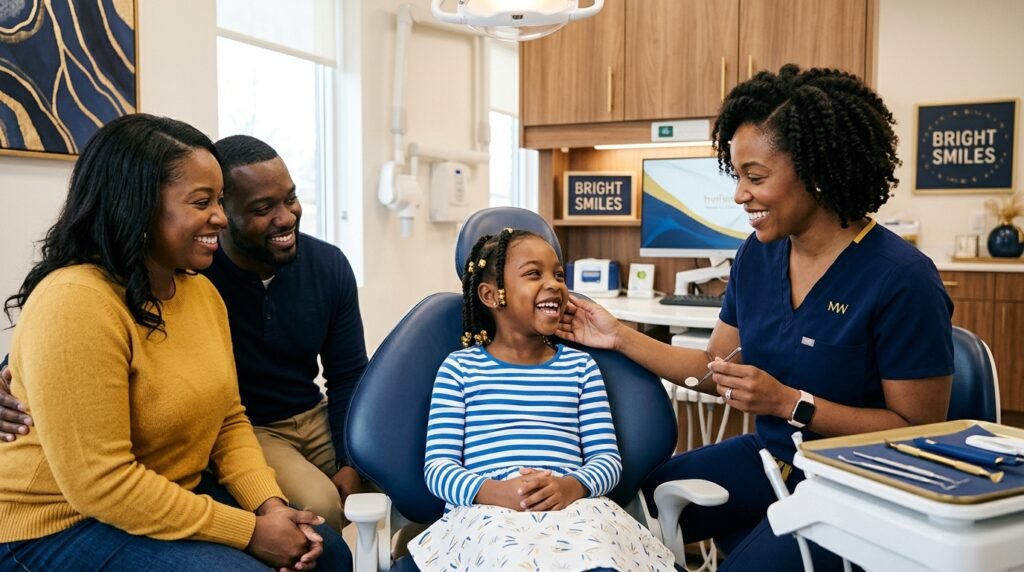
The biggest shift isn’t willpower — it’s building a relationship with a dentist your family actually wants to see. A provider who takes time to explain, doesn’t rush the visit, and creates a comfortable environment for kids specifically changes whether a family shows up consistently or avoids the office until there’s a crisis.
Practical starting points:
- Book the first cleaning before there’s a problem — a checkup, not a treatment plan, resets the relationship.
- Ask about payment plans or sliding-scale options directly; many practices offer them but don’t advertise it.
- Bring kids in by age 1, per American Dental Association guidance, to build comfort with the environment early.
- Treat it like any other health appointment — on the calendar, twice a year, non-negotiable.
What to Look for in a Dentist Who Actually Gets It
The right fit explains procedures in plain language, answers questions without making you feel rushed, and creates a genuinely welcoming environment for kids and adults with dental anxiety alike. That’s worth prioritizing over simple proximity or the first name that comes up in a search.
✅ Free Tool: Family Dental Care Checklist
Check off what’s already true for your household.
Frequently Asked Questions
Why is dental care so often skipped or delayed?
Cost, limited access to providers accepting certain insurance, and past uncomfortable experiences are commonly cited reasons dental visits get delayed compared to other routine healthcare.
Is oral health really connected to overall health?
Yes. Gum disease is linked to increased risk of heart disease, complicates diabetes management, and is associated with higher rates of preterm birth when untreated during pregnancy.
When should kids first see a dentist?
The American Dental Association recommends a first dental visit by age 1, to build comfort with the environment early.
How often should a family get dental checkups?
Twice a year is the standard recommendation for routine checkups and cleanings for most people.
Where can I find a Black dentist in Florida?
BlackOwnedFlorida.com maintains a directory of Black doctors, including dentists, across Florida.
Browse the Directory →