
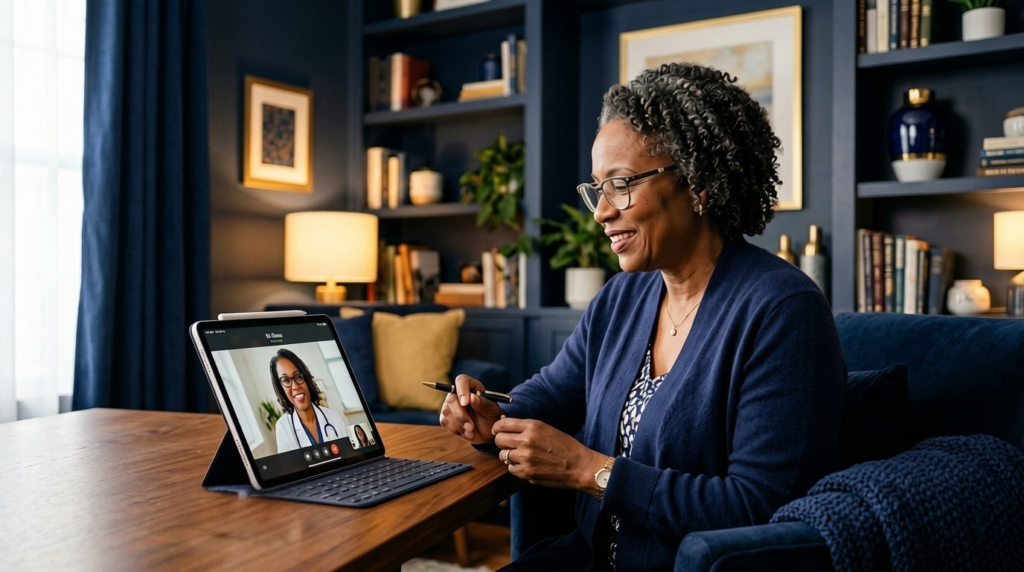
Virtual Care Removed One Barrier to the Doctor. It Revealed Another.
Telehealth promised to reach patients who face transportation gaps, rigid work schedules, or a shortage of nearby providers. Here’s an honest look at whether that promise is actually being kept.
Telehealth expanded fast, and for good reason. No commute, no time off work waiting in a lobby, no need to find childcare for a 20-minute appointment. For a lot of families, that convenience genuinely opened a door that used to stay closed. But convenience for one barrier doesn’t automatically mean equity across all of them, and it’s worth looking honestly at where virtual care is actually delivering, and where it’s quietly creating a new gap in its place.
Find a Black Doctor →
What is telehealth, and how has it expanded in Florida?
What began as an emergency accommodation became, for many practices and patients, a standing option. Primary care check-ins, mental health counseling, and many specialist follow-ups can now happen without either party leaving home, and Florida has kept much of the reimbursement flexibility that made this financially viable for providers to offer long-term.
Does telehealth actually help close healthcare access gaps for Black Floridians?
The honest picture is mixed. For a patient who can miss a shift to sit in a waiting room, telehealth is a genuine improvement. For a patient without reliable home broadband, a private space to take a video call, or a smartphone with enough data, telehealth can quietly become one more barrier disguised as a convenience. Closing one gap while opening another isn’t progress, it’s a shift in who gets left out.
What are the barriers still standing in the way?
- Broadband and device access. A meaningful video visit requires a stable internet connection and a device with a working camera, both of which are less consistently available in some communities than others.
- Digital literacy and comfort, particularly for older patients navigating an unfamiliar app or portal alone.
- Privacy at home, especially in multi-generational households where finding a quiet, private space for a sensitive conversation isn’t always simple.
- The relationship itself. Some conditions, and some conversations, genuinely benefit from being in the same room as your doctor, particularly on a first visit.
How do I make the most of a telehealth visit?
- Prepare like it’s an in-person visit. Write down symptoms, questions, and medications ahead of time so you don’t lose the thread mid-call.
- Test your setup beforehand, camera, microphone, and internet connection, so technical issues don’t eat into your appointment time.
- Ask directly if something needs to be seen in person. A good provider will tell you honestly when a physical exam matters.
- Use telehealth as a complement, not a total replacement, for an ongoing relationship with a primary care doctor you trust.
✅ Free Tool: Telehealth Readiness Checklist
Check off what’s already in place before your next virtual visit.
Frequently Asked Questions
What is telehealth?
Telehealth is medical care delivered remotely through video, phone, or messaging rather than an in-person office visit.
Does telehealth actually close healthcare access gaps for Black patients?
Partially. It helps patients facing transportation or scheduling barriers, but research shows lower telehealth adoption among Black and lower-income patients, often tied to broadband and device access rather than interest in using it.
What are the biggest barriers to telehealth access?
Reliable broadband and device access, digital literacy, and privacy at home are among the most commonly cited barriers.
Should telehealth completely replace in-person doctor visits?
No, it works best as a complement to an ongoing relationship with a primary care doctor, with in-person visits still appropriate for physical exams and first-time evaluations.
Browse the Directory →